
I remember the first time I played a truly adaptive narrative game. It was late 2019, and I’d spent three hours making choices in a story that seemed to genuinely respond to my decisions. Not in the scripted, branching way I’d grown accustomed to, but in something that felt almost organic. The character remembered an offhand comment I’d made hours earlier. The dialogue shifted based on my play style. Something fundamental had changed in how stories could be told.
That experience sparked my fascination with AI driven interactive storytelling a field that’s been evolving rapidly and quietly transforming entertainment, education, and even therapy.
Understanding the New Storytelling Paradigm
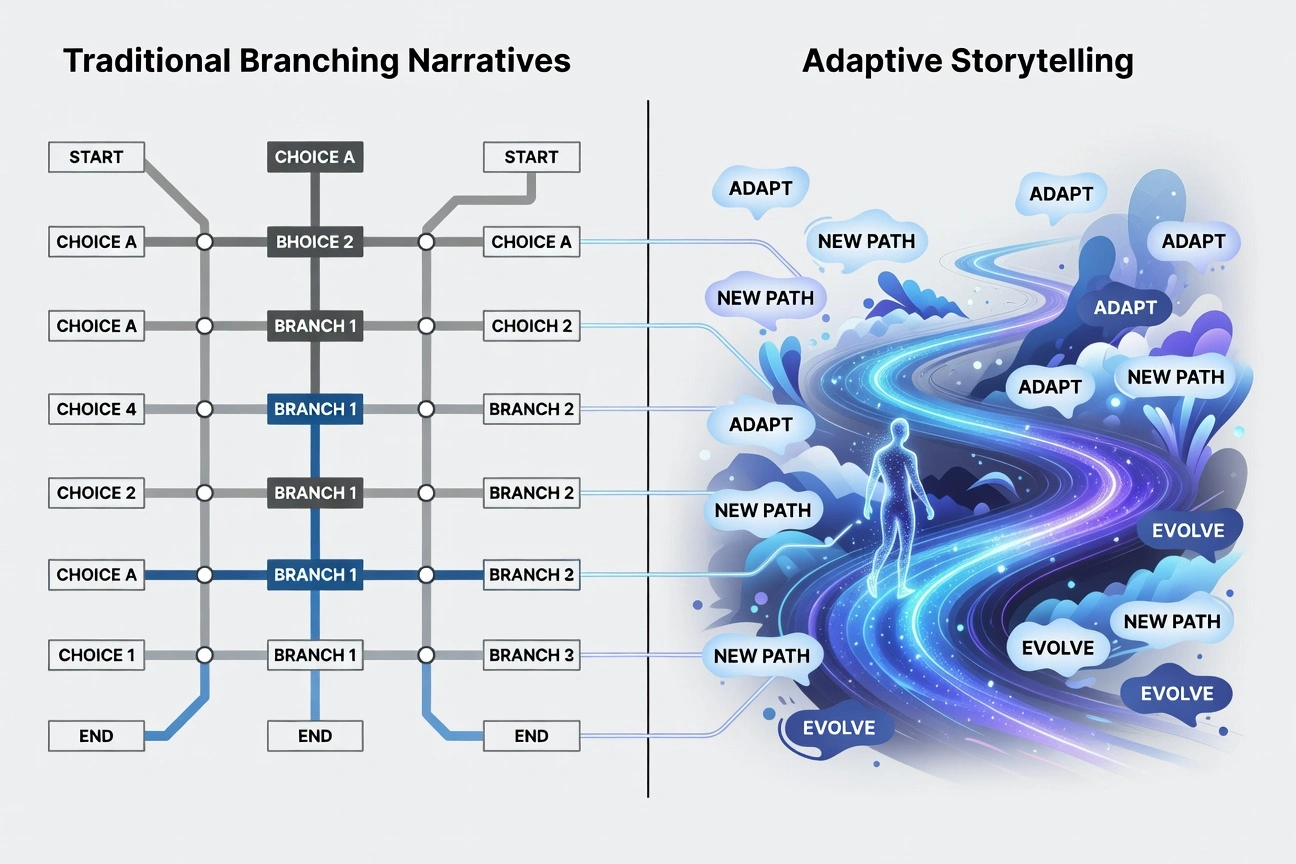
Interactive storytelling isn’t new. Choose your own adventure books have existed since the 1970s. Video games have offered branching narratives for decades. But here’s where things get interesting: traditional interactive stories operate on predetermined paths. Writers create every possible outcome beforehand. The story feels interactive, but you’re really just selecting from a fixed menu of options.
AI driven interactive storytelling operates differently. Instead of following preset branches, these systems generate narrative content dynamically. They respond to user input in real time, creating story elements, dialogue, and plot developments that weren’t explicitly written by human authors. The narrative becomes genuinely responsive rather than merely branching.
Think of it this way. A traditional interactive story is like a subway system multiple routes, but all predetermined. An AI driven narrative is more like having a personal guide who adjusts the journey based on your interests, questions, and pace.
The Technology Making It Possible
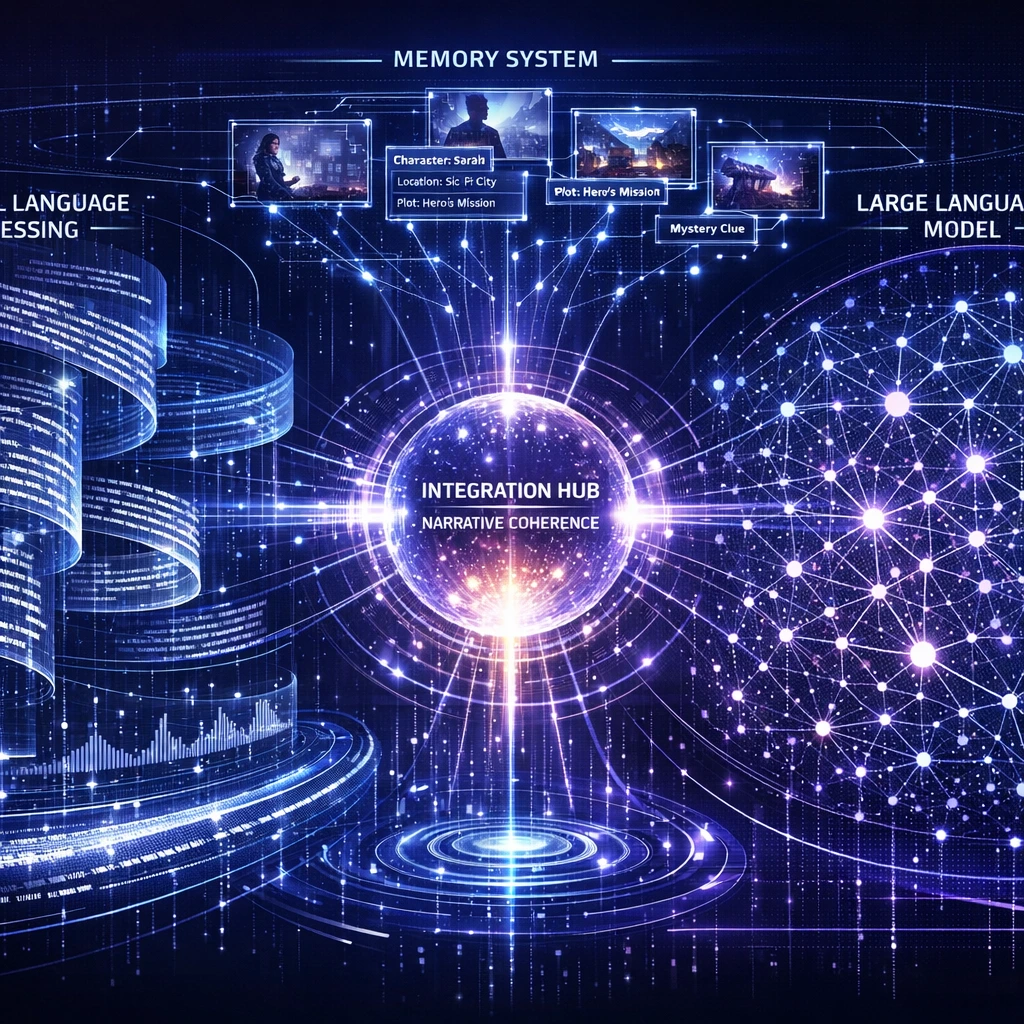
The backbone of this technology relies on several interconnected systems. Natural language processing allows these platforms to understand user input whether typed, spoken, or selected through interface choices. Large language models trained on vast libraries of fiction, dialogue patterns, and narrative structures enable coherent story generation.
But the real magic happens in the integration layer. The best AI storytelling systems maintain what developers call “narrative coherence” ensuring generated content remains consistent with established characters, settings, and plot threads. This involves complex memory systems that track story states, character relationships, and user preferences.
I’ve spoken with developers at studios working on these systems, and they consistently emphasize that the technology isn’t about replacing human creativity. Rather, it’s about expanding the possibility space of what stories can become.
Where We’re Seeing Real Applications
Gaming remains the most visible application. Studios like Latitude with their “AI Dungeon” platform demonstrated early potential, allowing players to engage in open ended text adventures where virtually any action was possible. More recently, companies like Hidden Door have partnered with major publishers to create licensed AI narrative experiences based on established intellectual properties.
But entertainment is just one slice. Educational platforms now use adaptive storytelling to teach history through immersive scenarios where students interact with historical figures. Medical training programs employ narrative simulations where practitioners navigate patient interactions that respond realistically to their diagnostic choices.
Perhaps most compelling are therapeutic applications. Narrative therapy platforms allow individuals to explore personal challenges through guided stories that adapt to their emotional responses and therapeutic goals. Early research suggests these approaches can complement traditional therapy, particularly for trauma processing and anxiety management.
The Creative Collaboration Question
Here’s where I’ve seen the most debate among writers and developers: does this technology diminish human creativity or amplify it?
Having worked with several narrative designers who incorporate these tools, I’ve observed something interesting. The most successful implementations treat the technology as a collaborative partner rather than a replacement. Human writers establish the world, core characters, thematic boundaries, and narrative guardrails. The AI system handles moment to moment dialogue generation and adaptive responses within those parameters.
One narrative designer I interviewed compared it to improvisational theater. “I’m setting the stage, establishing the premise, defining the rules. The AI is like a skilled improv partner who can riff within those boundaries while keeping the scene moving.”
This collaborative model addresses a persistent limitation of purely procedural storytelling the “infinite but shallow” problem. Without human creative direction, AI generated narratives often feel meandering and emotionally flat. The combination of human intentionality with AI responsiveness seems to produce the most engaging results.
Challenges That Remain
Let’s be honest about the limitations. Current AI storytelling systems still struggle with long-form narrative coherence. They can maintain consistency for shorter experiences, but multi hour stories often develop contradictions or lose thematic focus.
Emotional depth presents another challenge. While these systems can generate competent dialogue, capturing the subtle emotional resonance of carefully crafted human prose remains difficult. The technology excels at breadth of possibility but often sacrifices the depth that makes stories memorable.
There are also legitimate concerns about content moderation. Open ended narrative systems can be pushed toward inappropriate or harmful content. Responsible developers implement safeguards, but the tension between creative freedom and safety boundaries remains unresolved.
Looking Forward
The trajectory seems clear. As these technologies mature, we’ll likely see AI driven narratives become increasingly sophisticated better at maintaining coherence, more nuanced in emotional expression, more seamlessly integrated into various entertainment formats.
What excites me most isn’t the technology itself but the new storytelling possibilities it enables. Stories that genuinely respond to individual readers. Narratives that explore different perspectives based on user identity and choices. Educational experiences that adapt to learning styles in real-time.
We’re witnessing the emergence of a fundamentally new storytelling medium. Not a replacement for traditional narratives, but an expansion of what stories can be and do.
Frequently Asked Questions
What is AI driven interactive storytelling?
It’s storytelling where artificial intelligence generates narrative content dynamically based on user input, creating responsive stories rather than predetermined branching paths.
How does it differ from traditional video game narratives?
Traditional games use pre written branching paths. AI driven systems generate content in real time, enabling unlimited narrative possibilities within defined parameters.
What platforms currently offer AI storytelling experiences?
Popular platforms include AI Dungeon, NovelAI, Hidden Door, and various educational and therapeutic applications across web and mobile platforms.
Can AI replace human writers in storytelling?
Not effectively. The best implementations combine human creative direction with AI responsiveness, treating the technology as a collaborative tool rather than replacement.
Is AI-driven storytelling safe for children?
Reputable platforms include content moderation systems, but parental oversight remains important as open-ended narratives can potentially generate inappropriate content.
What industries use interactive AI narratives?
Gaming, education, corporate training, mental health therapy, marketing, and entertainment industries all actively implement this technology.